What should people carry home?
Name one change you hope to see: a new understanding, a conversation to start, a habit to practice, or a response of faith. A clear outcome is more useful than a long list of topics.
A practical checklist for youth directors, church leaders, and conference teams choosing a speaker and preparing a meaningful experience.
Discuss your event ↗Based on years working in youth ministry, conference sessions, and event facilitation, these are practical questions AJ recommends settling before a speaker begins building the experience.
Name one change you hope to see: a new understanding, a conversation to start, a habit to practice, or a response of faith. A clear outcome is more useful than a long list of topics.
Describe the age range, faith background, adult leaders, group size, and known pastoral sensitivities. A room of seventh graders needs a different pace than adult volunteers.
Share the larger schedule: worship, discussion, free time, music, and transitions. For multi-session events, build a coherent thread instead of unrelated talks.
Confirm microphones, screen visibility, power, movement space, props, stage access, and rehearsal or sound-check time. Let your speaker know which production requests need advance approval.
Designate the leaders who can help attendees process questions or take practical steps after the session. The most valuable conversations may happen outside the auditorium.
Include proposed dates, location, expected attendance, age group, session count, theme, budget guidance, and travel expectations. Specifics help clarify fit and scope sooner.
If you're organizing a middle- or high-school event, start with youth speaking and explore Unfiltered for a connected experience centered on identity and grace.
If you're planning a retreat for adults or a leadership gathering, explore adult speaking and workshops covering identity, community, daily faith, and healthy influence.
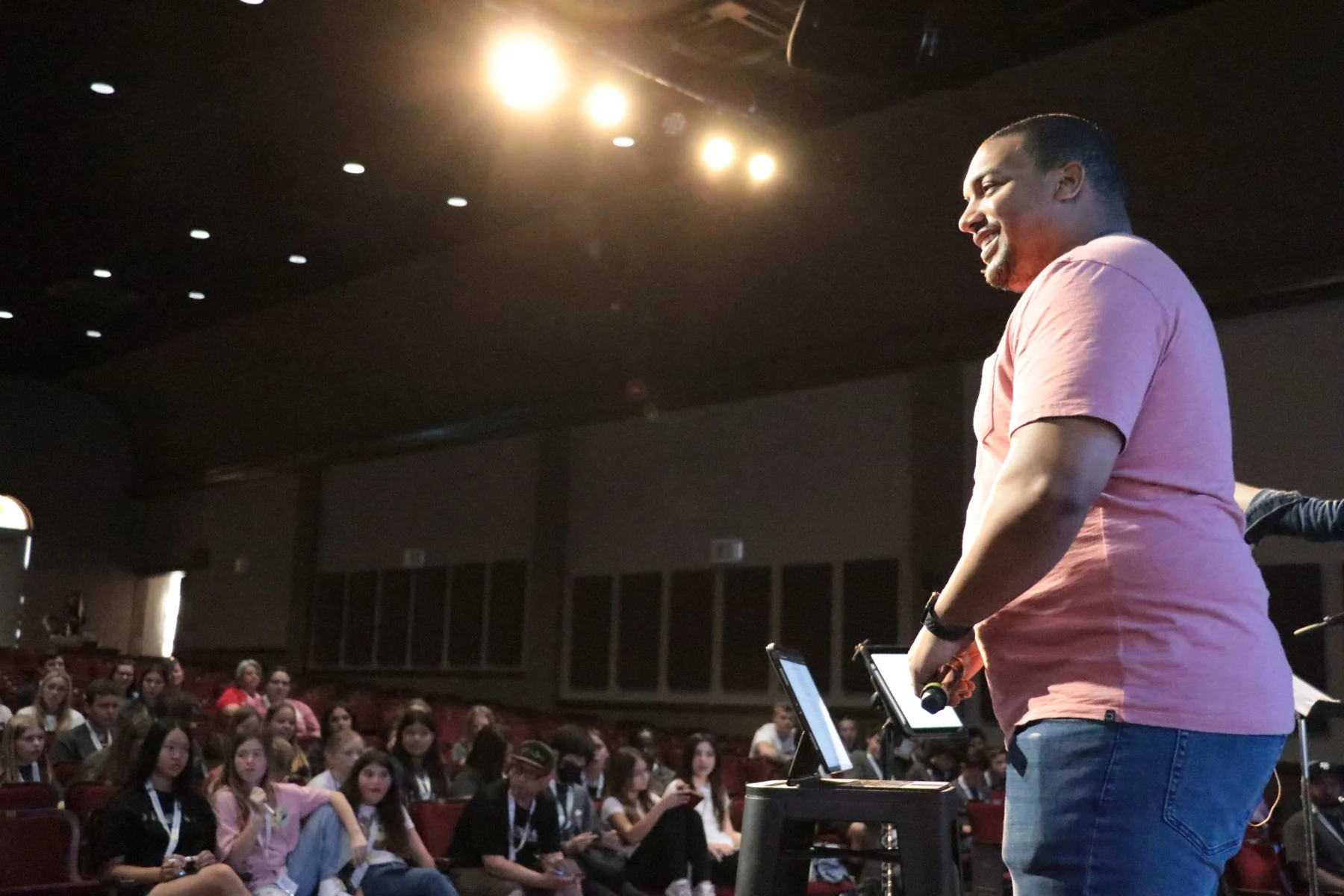
As soon as you know tentative dates, audience, theme, and a working budget. Availability is not guaranteed until details are confirmed.
Not necessarily. A connected narrative can help a multi-session gathering deepen the message and make space for reflection across the weekend.
Yes, when appropriate for the event. A short pause for guided reflection or small-group conversation can help students and adults process what they have heard.
Include organization, contact, proposed dates, venue or location, audience ages and size, planned sessions, event theme, and any known travel or budget constraints.
Tell AJ what you're planning, who will be there, and what you want people to carry home.